Diversity and medicinal properties of Dioscorea bulbifera L.: a valuable wild tuber crop of Simlipal Biosphere Reserve Forest, Odisha, India


 REGIONAL SCIENCE CONGRESS ON " INNOVATION IN SCIENCE & TECHNOLOGY FOR INCLUSIVE DEVELOPMENT"
ORGANIZED BY
THE INDIAN SCIENCE CONGRESS ASSOCIATION
BHUBANESWAR CHAPTER
AT
KIIT UNIVERSITY, BHUBNESWAR
JANUARY, 27-28, 2014, PP-49.


Diversity and medicinal properties of Dioscorea bulbifera L.: a valuable wild tuber crop of Simlipal Biosphere Reserve Forest, Odisha, India


Shanti Prava Behera, Sanjeet Kumar, Sakti Kant Rath and Padan Kumar Jena

Department of Botany, Ravenshaw University, Cuttack- 753 003, Odisha

sanjeet.biotech@gmail.com
 

Simlipal Biosphere Reserve (SBR) forest is located in the district Mayurbhanj of the state, Odisha. Government of India declared SBR as a Biosphere Reserve in 1994. UNESCO added the National Park to its list of Biosphere Reserve in May 2009. The National Park has total area of 2,750 Km2 and the average elevation of 559.31 meters. It has a mixed type of vegetation such as semi-evegreen, tropical moist broadleaf and tropical moist deciduous forest. It is the hub of different tribal communities living in 64 villages inside the SBR. The major aboriginals are Mankardia, Kharia, Kolho, Santhal, Ho, Bathudi and Munda. They do agriculture for short periods and depend on wild plants for their food and medicine. Among their wild foods Dioscorea species are important as per availability and consumption rate. These wild tubers locally known as “Ban Aalu” or “Sanga”. The common Dioscorea species available in SBR are Dioscorea puber, Dioscorea hispida, Dioscorea pentaphylla, Dioscorea bulbifera, Dioscorea oppositifolia etc. Among Dioscorea species, Dioscorea bulbifera is more common. It has sound ethnobotanical values and also frequently used as food by the tribal communities of SBR. It is used against syphilis, toothache, aphthae, psoriasis, rheumatism, aphrodisiac, rejuvenator, tuberculosis, leprosy, urinal troubles and diabetics. It is also taken as cooling agent to reduce body heat during summer and as contraceptive by the tribal ladies. The tubers and bulbils are eaten as vegetables and snacks after much preparation due to their bitterness. It is very popular food as main meal along rice. Dioscorea bulbifera is frequently found in Gurguria of SBR. It is also rich at Ghatkumari, Kasipani, Bakua and Sanuski villages of SBR. The availability of this valuable wild tuber crop is declining due to various anthropogenic activities. Therefore, urgent need to take appropriate steps for the conservation of this plant for sustainable use of bio-resource. It will be helpful for the documentation of ethnobotany and development of new drugs.

Key-words: Dioscorea bulbifera, Ethnobotany, Simlipal Biosphere Reserve

Bauhinia vahlii : an important economic climber of district Keonjhar, Odisha

Regional Science Congress on : Innovation in Science & Technology for Inclusive Development" Organized by The Indian Scoence Congress Association Bhubaneswar Chapter at KIIT University, Bhubneswar January 27-28, 2014 pp-53.  

Bauhinia vahlii: an important economic climber of district Keonjhar, Odisha 

Sanjana Singh, Sanjeet Kumar and Nihar Ranjan Singh

sanjeet.biotech@gmail.com
Department of Botany, Ravenshaw University, Cuttack- 753 003 Odisha, India

Bauhinia vahlii is a common economic plant, belongs to family Caesalpiniaceae, locally known as “Siali”. It is a gigantic climber, and important non-timber forest product (NTFP), found in Central and Southern Odisha. The leaves of this plant are used for making domestic plates. Leaves have also medicinal values and used in various diseases such as demulcent, dysentery and stomachache. Tribal Odisha, use its parts in various purposes. Stem bark is used for preparing ropes. Seeds are edible after roasting and considered a substitute of almond. Seeds are also given to cure infertility in women. Root decoction is given orally in fever. Therefore, keeping this, in view an attempt has been taken to document its economic values and evaluate the bioactive compounds present in plant parts of Bauhinia vahlii using the standard methods. Field study indicated its economic importance of the plant among the tribal populace of study area. Results revealed that important phytochemicals present in the experimental plant parts, such as alkaloid, tannins, saponins, phenols, flavonoids, terpenoids and steroids. Further study needed to evaluate the bioactivity of the plant parts extracts for formulation of new drugs. 

Key-words: Bauhinia vahlii, economic importance, phytochemical analysis

Dioscorea species: source of saponin derived anti-inflammatory drugs to fight against complex regional pain syndrome


Abstract published
 
International Conference on Neurosciences, Theme: “Brain Plasticity and Neurological disorders”. 9th to 11th November 2013, Department of Zoology, School of Life Sciences, Ravenshaw University, Cuttack, India, pp-36-37.

Dioscorea species: source of saponin derived anti-inflammatory drugs to fight against complex regional pain syndrome

Sanjeet Kumar, Nihar Ranjan Singh, Shanti Prava Behera, Shakti Kanth Rath and Padan Kumar Jena
Abstract

Complex regional pain syndrome (CRPS) or causalgia is a chronic systematic diseases characterized by severe pain and swelling. It initially affects an arm or a leg and often spreads throughout the body. It is a multifactorial disorder with inflammation, sensitization and maladaptive neuroplasticity. The major treatments are scrambler therapy, contrast bath therapy, mirror box therapy, symapthectomy, use of ketamine and anti-inflammation drugs.anti-inflammation drugs are very important to treat this syndrome. There are list of anti-inflammation synthetic drugs such as aspirin, ibuprofen, diclofence etc. Those are used all over the world. One isolated saponin derived compound, diosgenin from Dioscorea species is very common, which acts as aspirin and possess acute anti-inflammatory and analgesic effects. The isolated saponin (3-beta-2-acetoxy-benzoyl-diosgenin) from Dioscorea zingibenensis showed 7.92 % and 14.51 % anti-inflammatory activities at the dose of 126 mg/kg and 252 mg/kg body weight in mice (Mh et al., 2011). Keeping this in view an investigation was made to screen the saponin in three solvents n-hexane, methanol and water with polarity 0.1, 5.1 and 10.0 respectively in tuber of four Dioscorea species i.e. Dioscorea puber, Dioscorea pentaphylla, Dioscorea bulbifera and Dioscorea alata. The species are prevalent in Odisha. Results showed presence of 99.0 % of saponin in water, 33.3 % in methanol and no indication of saponin in n-hexane extract. Further studies are being carried out to validate the anti-inflammatory activity of the isolated saponin of above Dioscorea species. Such investigation will be helpful and will provide base to formulate synthetic drug to fight against CRPS.

Antibacterial and Phytochemical Evaluation of Dioscorea alata L.: a medicinal food crop of rural Odisha


Abstract published
 
National Seminar on “Innovations in Science & Technology for inclusive development” organised by Indian Science Congress Association on the occasion of the 16th Odisha Bigyan Congress, November 23-24, 2013 at Institute of Physics, Bhubaneshwar, pp-143.

Antibacterial and Phytochemical Evaluation of Dioscorea alata L.: a medicinal food crop of rural Odisha

Sanjeet Kumar
A. Singh, S. P. Behera, S.K.Rath, N.R.Singh and P.K.Jena
Department of Botany, Ravenshaw University, Cuttack-753003

Abstract
Dioscorea alata L., commonly known as Mati aalu, is a monocot vine having tuberous root along with aerial edible bulbils. It belongs to family Dioscoreaceae and is very popular food supplement among the tribal and rural communities of the state of Odisha. The tuber juice is used as cooling agents during summer in southern part of Odisha. Its parts are used as food and medicine among rural and tribal communities of the state. Keeping this in view, an attempt has been made to evaluate the antibacterial activity of Dioscorea alata L. Tuber extracts. Phytochemical evaluation was carried out. Phytochemical screening showed wide pharmacological values of this plant. Presence of tannin, flavonoids and phenolic compounds in all tuber extracts may be responsible for antibacterial and other bioactivities. Antimicrobial activity and MIC activity using Disc Diffusion assay of methanol and acetone extracts was carried out. Both extracts showed prominent activity against Vibrio cholera, Shigella flexnerii, Salomnella typhi, Streptococcus pyogenes and Streptococcus mutans. Results validate Dioscorea alata L. is not only a food plant, but also a good source for formulation of new antimicrobial agents. Further works need to be carried out for pharmacological evaluation of Dioscorea alata L. plant parts.

PP.41. Empirical Tribal claims and correlation with antimicrobial activity: a study on Dioscorea pubera Bl. Enum. a medicinally important famine wild tuber crop of Similipal Biosphere Reserve, Odisha


National Conference on New Frontiers in Medicinal Plant Research - 2013
&
Special Meeting on
Medicinal Plants for Livelihood Security & Community Empowerment in Eastern Himalayas
3-5 October 2013
Gangtok, East Sikkim
Organized by 
Department of Botany, Sikkim University
81 | P a g e

PP.41. Empirical Tribal claims and correlation with antimicrobial activity: a study on Dioscorea pubera Bl. Enum. a medicinally important famine wild tuber crop of Similipal Biosphere Reserve, Odisha

Sanjeet Kumar et al., 2013
Department of Botany, Ravenshaw University, Cuttack- 753 003, Odisha, India
Email Id: sanjeet.biotech@gmail.com


Abstract
National Park, Biosphere Reserves and Sanctuaries are the prominent habitat of ethnic tribes and their medicinal practices. Similipal Biosphere Reserve (SBR) Forest is hub of unexplored wild plants having medicinal as well as food values. The ethnic tribes of SBR are in habit of using plants and their parts for curing of different diseases. Among those plants, Dioscorea species are one of them which are used against different diseases by aboriginals of SBR. Dioscorea pubera Bl. Enum. is an important medicinal wild food plant of genus Dioscorea. It is distributed throughout the forest ranges of SBR. Tribal communities have been using its parts against different types of skin infections and as tonic for poor appetite.Therefore, an attempt has been made to evaluate the phytochemical and antimicrobial activity of Dioscorea pubera tuber extracts. Aim of the study was validation of tribal claims through assessment of ethnobotanical values, detection of bio-active compounds and antimicrobial activity of Dioscorea pubera Bl. Enum tuber extracts. Ethnobotanical data collection were made following Christian and Brigitte, (2004) followed by field survey, taxonomic characterization and interaction with tribal communities. Qualitative analysis of bio-active compounds were carried out by Harborne, (1973); Trease and Evans (1989) and Kumar et al., (2007). The antimicrobial activity was done using Disc Diffusion Assay (Taormina et al., 2001). The ethno-botanical survey indicated wide medicinal uses of this plant among the tribal communities of SBR.Tuber extract are commonly used against skin infections. The phytochemical analysis showed the presence of bioactive compounds such as tannin, flavonoids, phenolic compounds, saponins in aqueous extract that posses anti-microbial activity. Antimicrobial assay showed relevant zones of inhibition against Streptococcus pyogenes (MTCC 1926) and other strains at different concentration of the tuber extracts used. The investigation validates the tribal claims for skin infections through phytochemical screening and antimicrobial activity of the tuber (Dioscorea pubera Bl. Enum) extracts. This study further highlights the therapeutic medicinal values among the aboriginals of SBR. Further, isolation, purification and characterization of bio-active compounds in tuber extracts will aid to the formulation of new antimicrobial agents.

Memories & Similipal Biosphere Reserve (Save Forest Save Life)

Sanjeet Kumar
sanjeet.biotech@gmail.com

Ravenshaw University

The Similipal Biosphere Reserve has been notified by Government of India on the 22nd June, 1994. It comprises of the entire Similipal sanctuary (core and buffer together), the adjoining Nato and Satkoshia Reserve Forests forming additional buffer and a belt of approximately 10 KM width all around the entire buffer designated as the 'transition zone'. The total area of this BR is 5569 Sq. KMs. The Similipal hill ranges, a densely forested area constitute the core and a part of the buffer zones of the BR, and there are also 65 villages within these two zones including four in the core zone. Similipal is in the eastern end of the eastern ghats and classified in the Chhotanagpur biotic province of the Mahanadian bio-geographical region. The transition zone of the Reserve has 1200 villages whose total population is about 4.5 lakhs. The tribals constitute about 73% of this population. The forests and the biodiversity resources to a great extent sustain the livelihood of these people. The forest and wildlife in the sanctuary, and the human population and cattle living in close proximity impact on each other. The Management Action Plan for the BR seeks to put emphasis on suitable programmes of eco-development in the transition zone and also to a limited extent in buffer zone, to promote various alternative livelihood options, and thereby to reduce people's pressure on the forests.
 
Some Beautiful pictures of Similipal Biosphere Reserve


Mr. Prakash Kumar Tripathy at Padampur, Similipal Biosphere Reserve Forest 

 
Mr. P.K.Tripathy and Dr. N.R. Singh, Member of My Research Team at Similipal

My reserach team at Similipal

Collecting information at Weekly Haat of Jashipur


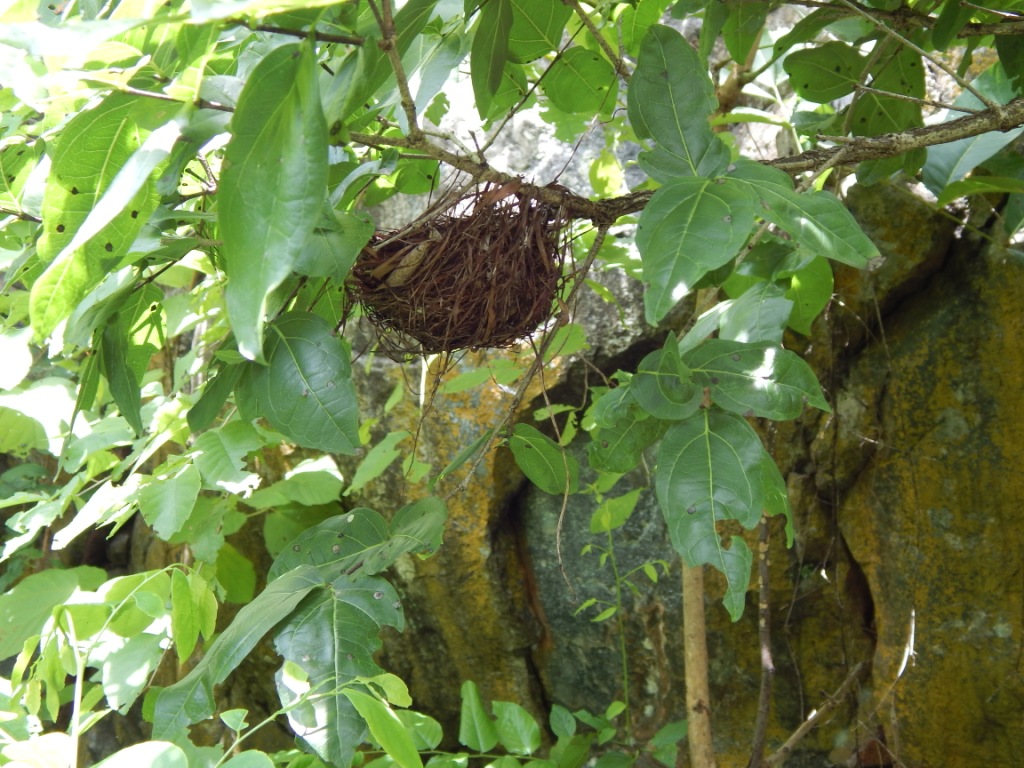
Waoooo, Wonder of Birds at Similipal

Simlipal Biosphere reserve


Me, Sanjeet & my research team at Simlipal Biosphere reserve
 
Save Forest, Save Life
 

Kerang: A cultural heritage of Deomali hills

The Gadaba and Bonda tribal communities of the Deomali hills possess an age-old tradition of weaving distinctive textiles using fibres deriv...